Showing posts with label deer hunting. Show all posts

Tuesday, November 26, 2013

Finished Blood Trail Dogs For Sale

I am writing this article for 2 reasons:

#1.  I have several dogs that are finished in their own right and hunt for me,
AND #2, I am willing to sell them, but  95% of the people calling who are looking for blood tracking dogs, want a finished dog that will hit the ground running without any transition time for the dog to adjust and hunt for the new owner. This is a big problem faced by dog buyers who operate from the presumption that buying a finished dog is a surer and time wise shorter means of getting a blood trailing dog to work for you during this ongoing deer season.

And...               I couldn't disagree more!

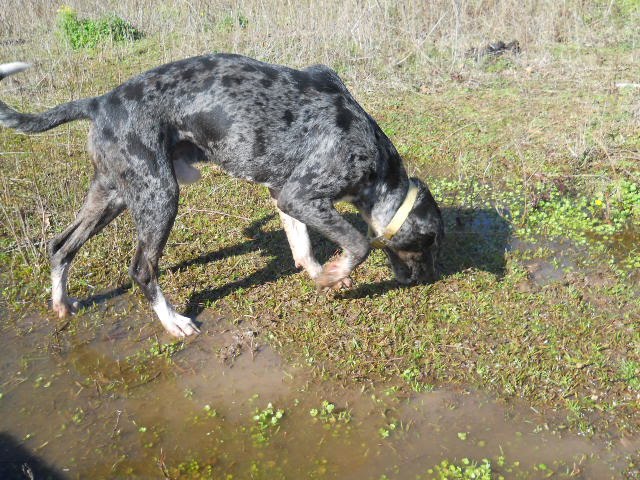
                                                   Toulouse with his nose on the ground...
 
But first.... let's consider what you could be missing by NOT having a tracking dog
 that WILL work for you NOW!
 
Such as...
 
Your daughter's first deer
~photo courtesy of Sarah Whatley Stringer~
 
 
Or...
 
this fine 12 point that was harvested in Michigan yesterday and.... was tracked and found courtesy of Michigan's deer tracking dogs, and he can be reached at: (810) 240-4891 
 
here is another shot of this 12 pt. just so you can compare it to this BIG man...
 
Just shoot that and try to suffer NOT finding it without a dog if there is no blood visable!
 
 
Back to blood tracking dogs for sale...


But actually what may be the quickest, and in the long run the easiest means of owning a tracking dog in this season is in getting a started puppy,
about six months to a year old from me that has been trained in my facility and eating raw meat all of its life,
and is ready to fire off, especially NOW that the deer season is in progress and that my friend, is the quickest plan in my opinion, to have a blood tracking dog work with you now.
And I know you want a finished dog, but, after getting a puppy way ahead of the hunting season, the next best thing is to get a started dog DURING deer season and put them on real blood trails as much as possible, because as you can see above, eating deer meat at my facility is an ongoing part of life.


And... if you really want a finished dog, remembering the title of this post... why is it that this is the absolute best time of the year, now that deer season is in progress? Because when it comes to training a started OR finished tracking dog, the rubber meets the road
and real blood trail dog training occurs during deer season, not in the off season, and this is a great time and way to help your new dog understand that you want them to track blood because you can at the very least feed them raw deer meat, and put them on multiple blood trails even if you have found the deer already, because the more you give them in blood experiences, the more focused they are.

 Remember that they were trained to track FOR ME, NOT YOU! And therefore, no mater how well trained they were by me, they were trained to track for me, not you.
This is your best time of the year to spend a lot of time with your new dog and develop the relationship factor ASAP, because it is a busy time of the year and the dog is capable of being a part of a lot of the goings on such as, the holidays with family,(and lots of left-over treats for the dogs),
and it is hunting season with dead deer on the ground, and you are going regularly to the hunting lease monitoring feeders and stands, and scouting, etc..,
and staying in at home during bad winter weather(with your dog in the house or camp!). Because of ALL of the above, you can spend a lot of time with the new dog, and easily overcome the relationship transition factors most people experience and do not understand that the dog is in an emotional transition, and more easily get a started OR finished dog to fire off and work for you.


And... #2.

95% of those people think if it is a "good" dog, it will hunt for anyone, anywhere, and anytime! And if #2 were actually true, then getting a finished dog makes a lot of sense, but the truth is: tracking dogs are part of a team of men and dogs, and if they don't know you, they won't hunt for you...


and because dogs are neuvo-phobic, meaning they are afraid of anyone or anything new, and a new place often causes them to stay close to your side, and not range out very far, so that way they don't lose you OR get left behind, so YOU must give them time to adjust, and work with them by moving them along, on leash or off leash until they warm up,  ...and if the dog is having a bad day, they won't hunt FOR YOU any and every time you want them to.

Why? For instance if a dog has broken ribs, because they fought with a live healthy buck yesterday on the last track, and every breath now hurts, they may not be as aggressive a hunter as they were yesterday. And you may want to bring in the back up dog,,,, Or if their best hunting partner is not around(such as their momma, or brother,) they may not hunt because(in the dogs mind) the team is not all there. Although an older dog works well solo,  often times a younger dog will not work alone, or just works better as a team with other older and more experienced dogs.


And....I'll let you in on one of my secret training methods, I don't train pups, my older dogs train the pups...sssuuussshhhhhh!


Here is the bottom line: If you wanted a finished dog for this hunting season, why didn't you buy a well bred puppy that was weaned on deer meat 3 or 4 years ago?
OK, maybe your dog just got lost or killed, and you don't have a back up... well you are in a bind that could have been avoided by having a back up plan, and that means you buy a new dog about every 3-4 years, and let it live with you and your finished dog, or as an option if you can only keep one dog, place it with someone as a pet in your hunting club, friends, family, etc... So, if you need a back up for what ever reason, you have one ready to go ASAP!

Let me share a true story, one that is repeated again and again among Catahoula breeders...

OK, ... Now here we are, I have several fine, well bred, well raised, well trained, and experienced blood tracking dogs for sale, and someone comes and picks one up and is convinced in less than 1 week that this dog will never be a blood tracking dog even though it has already found deer with me AND them, AND in less then one week they presume to know the dog better than I do, and I have spent years with the dog!(this a true story!)


 And here is the problem: I told him the dog would go through an adjustment period and the best thing for him to do to help the dog in this transition would be to keep the dog for a week or two, and if it slows down, then bring it back to me for a time, and then bring it back to the hunting club again, and see if it can get more comfortable with the program of tracking for other people(and this customer lived close enough to make the transport back and forth very practical).

Here is the solution: If I sell a finished dog, you must work with me in person or over the phone to facilitate as smooth a transition as possible.

 So... I call, leave messages, get no call back, and then a month later, he called to advise me that the dog is not working for his family! Big surprise! You failed to communicate with the breeder/trainer who spent many months OR YEARS with the dog, raising, training, socializing and knows a lot of tricks of the trade to help you connect with the dog, and facilitate a smooth transition!

And... here is the rest of the story: After five days of the dog doing really well with him, as I told him it would, he left the dog with his family contrary to my advise while he went offshore for 30 days to work, and the dog did not like being abandoned by the new owner! Although it was doing well for a few days with the new owner, when that man left, the dog was suddenly abandoned by his new friend and felt all alone because he was left with people he didn't know and maybe didn't like, and really needed to come home to me for it all to end well.  Then if the dog had went back at the end of the 30 days it might have gotten into the hunting season and the new owner had a tracking dog that had been there before and all ended well last time simply because it got to come home again in the first  "transition" period.

 I had been calling to help you facilitate the transition from me to you, but you don't communicate with me, and only communicate rejection to the dog by only looking for faults in the dogs performance, and thus the dog gets no positive reinforcement for THE THINGS DONE RIGHT.

 And believe me,
                                     my breed, the Catahoulas are very sensitive to such nonsense!

And then before you actually give the dog a chance to warm up and work for you, you reject the dog under the presumption that this one year old PUPPY should be acting like a 5 year old, well trained, and experienced blood tracking dog that YOU actually raised from a pup!


If you want to SAVE TIME and short cut raising a dog from a pup, you will pay for it in other ways, starting with the fact that I am putting 1 or 2 years of MY TIME AND MONEY into making YOUR FINISHED DOG a finished dog, because I travel thousands of miles every year visiting hunting clubs, and tracking for many difficult, hard to find deer, and some are not dead and are fighting mad when we get there as can be seen in the injuries Jessie girl sustained tracking a 9 point this month!
In case you are wondering, this buck was shot in the foreleg, and was otherwise a very healthy buck in full rut, when the dogs got there. Every time the deer tried to run, Jessie was nipping and biting it on the ass so bad, it had to turn and fight! As a result of his assaults on her head with hooves and antlers, you can see in the photo above that her head was still swollen 3 days later!
 
And here is smiles from some of my satisfied customers who bought puppies that ran blood tracks 500-600 yards long at only 3-4 months old!!

 So, if creating a finished dog is a process that is going to cost me time AND thousands of dollars, up front, and you are looking for a "good deal" in a finished dog, forget trying to luck out and find something for cheap with me!  Finished dogs are not cheap!


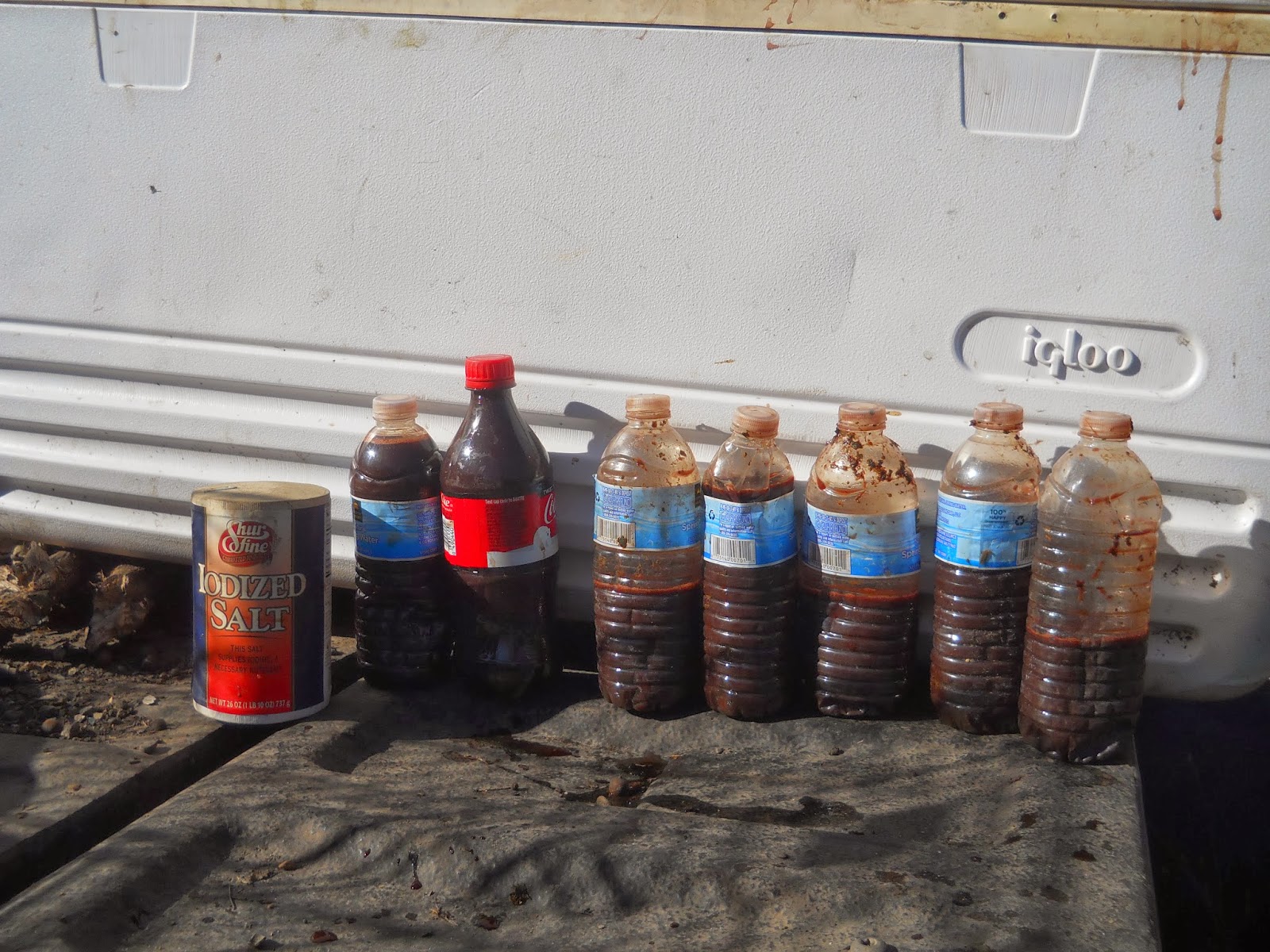
 I collect and store deer blood during deer season...

                                       
and I store heads, skins and legs during the hunting season...
and, I am constantly collecting deer, sheep, goat, and beef ribcages year round to simulate blood trail dog training exercises AND THE FEAST AT THE END OF THE BLOOD!
 
Not to fail to mention the cost of feeding, watering, medicating, worming, etc....


Another way you will pay is that a finished dog no matter how experienced, OR HOW MUCH YOU PAID FOR IT, will not work for you until you invest time into developing a close personal, warm relationship,
AND THEN... here is your biggest challenge: you also need to be taught by the person who raised and trained the dog!        Duhhhh!

*SO,  IF YOU BUY A FINISHED DOG, AT THE VERY LEAST, 'YOU' NEED TO BE TRAINED!

And...Most people who want a finished dog have grossly unrealistic expectations of what a "finished dog" should be doing and at what age.  In my opinion: a dog is never finished until they die because they just get better and better the older they get. Just get a puppy and invest in the long haul...and if you get a smart one based upon genetics, they may actually teach you how to track!


And if you buy a finished dog, there will always be a reality check on the fact that it is not now nor will it ever be the same dog with you as it is was with me! It could be better or it could be worse. Sorry there is no getting around the best way to have a finished dog is to raise them from a pup. This truth is not open to negotiation or discussion, and you can believe what ever you want. I and all the old timers can't ALL be wrong...so if you have to learn the hard way... good, because I don't want to argue about it.

So if you want a blood tracking dog, you can call me at 337 298 2630 and I will be posting more photos of finished and started dogs in my sell sites ASAP.

for a link:  de la Houssaye's Catahoulas  www.bloodtraildogs.com    www.delahoussayes.com

Tuesday, December 27, 2011

More Important Than Genetics

Below is a post from Facebook

If you need tracking services in Michigan you can call Rob at 810 240 4891


michigandeertracknhounds.blogspot.com


This my tracking dog Scout. He is a 4 year old mini dachshund and does not come from hunting stock or show lines. His breeder only breeds for house pets. He is a stellar tracking dog with over 30+ recoveries.

He is a very slow methodical tracker very easy to read and does not leave a cold trail to just chase hot game. He has very little prey drive. He simply loves to track and especially loves to please me.

This buck in the photograph was recovered over a distance of 2 miles. The buck was jumped from his wound bed and we continued to push him because we delt it was a single lung hit. After 1.5 miles the buck crossed a fairly deep river and at this point I called the track off until morning. It was 12.40 a.m.

The following morning at 8 am, I started Scout off on the opposite side of the river bank, his nose was already working while I was carrying him and by the time I set him down he knew exactly what game trail to take. The buck bedded down two more times and we found him stone cold around 9:30 a.m.. The buck was shot with a bow and both lungs had holes through them.

Monday, January 31, 2011

Molly's First Deer


Molly at 12 months old, with her first deer was never "trained" to be a blood tracking dog. She is as we say "a natural".

She was imprinted on blood, eating raw beef livers at my house starting at 3 1/2 weeks old for about a month or two before I gave her to Scott and his family to be their family ranch pet.


Below are a couple of pictures of Molly at about six months old, last summer.


Notice the loyalty and devotion in the photo below.


She just found her first deer this past weekend, and I will post those pictures in here along with some of her mother Scarlet which I shot in good light on a track about 2 weeks ago.


But, Molly found her deer after dark, and I was not there to photo, so Molly's owner, Scott, sent the hunt photos to me in an email and I pulled some more off the www.bayoubucks.com site.


The photo below and the other daylight shots are of Molly's mother on a track a few weeks ago in the same terrain. I am inserting those shots in the email for illustration and education purposes.


Scott just sent me an email of Molly's first deer with pictures.

I want to use this email to explain how a Catahoula works a blood trail.

The (enclosed inserts) are mine, to help explain what is happening.

-------------------------------------------------------------------------------------
Here is the email Scott sent me this morning:


Molly’s First Find.

It was a short track, but we lost the blood the last 20 yards(before the deer),


which does not sound very far, but(in the dark), the palmettos were so thick that you couldn't see five yards in front of you.


I tried to let her work on leash, but it was too thick, so I turned her loose.


She does really well. While on track, she does not leave you behind, she will stop and actually let you catch up(check back), then continues back on track.


We are both new at this, but I think with a little time and practical experience, she will be a good asset(blood tracker).


Jeremy was so happy, he was generous enough to give us a third of his deer meat.(better than giving the cayotes a chance)


I have to be careful because, I guess she thinks that since she found it, the deer belongs to her, and she gets very possessive(protective, guarding the kill).


Molly guarding the meat!


I had to put her leash back on, so they could drag the deer out.(She will relax in time, we hope!)


Jeremy Lemieux posted his story on the Bayou Bucks.com forum.


-------------------------------------------------------------------------------------
The link in the last line above will take you to the hunters post on bayoubucks.com(BTW, my forum handle there, is "catahoula1".

Now let's learn something about the Catahoula breed;

What Is A "Check Back"?

For those of you new to the Catahoula breed, you need to understand that a Catahoula Cur, especially a young one, will not go very far without you. If they know you are following them and you are close behind, they will keep moving forward. If you don't keep up, they will turn around on track and "check back".


Meaning, they will come back to you and make sure you are following their lead. When following a blood tracking dog, always trust the dog. If they do check back, do not give up, get anxious or get mad, you should reward them with a pat on the head, and praise them verbally; saying good dog, now go find the deer, blood trail, blood trail, find me some blood, come on dead deer!(get excited, be happy, and start moving forward again), and they usually turn around and continue tracking in front of you. (If they do not check back, they are most likely guarding the kill)


Catahoulas are naturally curious about new scents, and every blood trail is a new and unique scent to be explored and followed. This is natural instinct as a result of breeding, not training. Another natural instinct is protectivity.


Catahoulas Are Natural Protectors

And what that means is, they are by natural instinct, loyal and protective, and are not aggresive unless they feel that what they are bonded to and guarding(such as your family, property, or your deer!) is threatened, by an intruder. I suggest you spoil them rotten as a puppy and provide for and protect them when they are young and they will grow up to want to do the same for you for the rest of their life.


An 8 week old puppy bonding to her "new" momma!


You do not need to teach a well bred Catahoula to be protective or aggresive. It is bred into them and it will surface in a flash when needed. You need to protect your dog from getting himself and you in trouble as a puppy in the first year or two by working him on leash so you have control of him. The first and most important things to teach a Catahoula is obedience and ease of handling on leash, and hope he learns to socialize and warm up to people along the way, so he can be worked off leash, and not be a threat to people.


Now, when they find the deer, Catahoulas are often very protective of the kill. They will growl at anyone(excet their master and family), who gets too close to the deer.


A 10 week old puppy and "her" first deer!(same puppy of the previous photo)


They found it, and it is their deer until the master gets there. DO NOT try to over-ride the dogs position if you are not the owner of the dog. He or she is growling to give you fair warning. Back off, or you will get bit!

And, do not fuss at them for being protective. You(if you are the owner of the dog), should leash them and tie them back away from the deer, before the hunter gets there. If you are using your dog to track for someone else's deer, while tracking, I suggest you stay about 20-30 yards behind the dog, and the hunter about 10-30 yards behind you.


If you(or anyone), beat the dog for eating on or protecting the kill(that's her job), you may cause the dog to be afraid of tracking deer again. You can ruin a good blood dog in one night. Also be careful not to let anyone be too harsh on the dog(verbally or physically), for anything wrong(especially for puppies), anywhere around the deer, at the kill site, during transport, or in the skinning shed.

I advise you to let the dog be present at all of the above if possible. Best to tie them up with a cable lead(they can't chew through it), and let them be there in the skinning shed so they can watch and get treats, without the freedom to get in trouble. If you can't control the dog verbally or by tying nearby with a cable lead, and they continue to get in trouble anyway, and be fussed at anywhere around the deer, remove the dog to a secure area away from the deer. What you want the dog to experience is a totally feel good, positive re-enforcement, team work association, any time it is around a dead deer and receive some meat treats at the skinning and Bar-be-que if possible. Reward and praise them constantly in pursuit of and after the recovery of lost deer. A tracker should always be as close as possible to the dog in pursuit of a fresh track, so the dog does not have to check back too often. Then, in case the deer is jumped and charges the dog with his antlers down, be prepared to defend your dog and yourself with a pistol or shotgun when tracking big bucks.(if legally allowed)

If the deer is gutted at the kill site, give the dog some liver on site and save liver, kidneys, heart, sleen and lungs for later. I always let my dogs eat all they want of any innards at the kill site,


A 12 and 16 week old Catahoula puppy in the skinning shed.

and later, they can have everything including head, feet, skin, deboned carcuss, etc. after the deer is processed.


If your dog eats some choic meat when you are not looking, don't fuss too much, because it is not his fault, it is your fault that you left the meat there, where he could get to it, if he wasn't tied. It is very important that the dog be there in the skinning shed, but be secured by lead or in a crate, so they can't get in trouble.

Being too harsh and punishing the dog around a dead deer, could ruin your dogs motivation to find deer in the future. I have seen dogs be turned off to deer permanently, by someone who did not even own the dog, but was pissed to find the dog's head in their ice chest of meat, or being mad at the dog for protecting and growling at them for getting too close to the kill before the dog owner got there.

Dogs often associate rewards and punishment in a much larger picture than we are aware of. This may not apply to other breeds, but it is an important asset in the Catahoula when properly understood, valued, and handled. Please consider that your Catahoula will guard your kill should the cayotes show up and try to muscle in on the kill before you can get there, and Catahoulas are known for tackling and catching a deer by the throat and killing it, if it tries to get up and run should you jump it while tracking blood.


All of these natural abilities to protect and control the final destination of the meat to the leader of the pack(his master), are due to a Catahoulas' loyalty and grit. This may be a dog breed which is way too "high performance" and "aggressive" for most people, but if you think you can handle them, and you like the idea of having a natural protector around as your family pet, they are in my opinion, the ultimate short range, blood tracking dog.

Tuesday, May 4, 2010

The Raw Meat Diet

Let's go back to nature.

In the wild a dog's natural diet is raw meat from a fresh kill or aged meat from a scavenged find.

Either way, a dog does not hunt unless it is hungry!

So if you are feeding your dog right before you need them to hunt for you, they are not motivated by natural insticts, which goes back to the wolf.

Furthermore if you are feeding your dog the dried store bought crap most of us are led to believe is dog food, your dog may not know what real dog food is.

Here is Little Ray, double glass eyes, yellow leopard, three years old, notice his lean athletic physique, he was born on my property, and has been eating raw meat all his life. He is a natural when it comes to finding dead or wounded deer or hogs. He will also catch if the deer if it tries to get up and run. Lil Ray handles very well, is house broke, loves to ride in the truck or boat and does not range out very far without checking back when not on a leash. Although I reccommend using a tracking collar on all blood dogs, I don't feel like you really need one on Lil Ray.


This is Bud, he is not my blood line, but in spite of not having any spots or blue eyes he is all Catahoula. Bud was only a year old when the deer season rolled around last year so I haven't worked him as much as some of the older more seasoned dogs. He is silent on the track and works well off or on leash, but can at times pull hard. He has a very good appetite, and if you keep him lean during the hunting season he is very motivated to hunt for you, knowing he gets to feast on raw venison when he finds your lost deer and id the honored guest back at the camp. He may not be the best dog for a lady or child not familiar with handling a strong puller.


Here is Jesse's nose it is at least 10,000 times more powerful than your own.


Here at de la Houssaye's Catahoulas we live as close to nature as possible.


Here is a block of frozen meaty bones that I got from the meat market. These are government inspected raw meaty beef bones.


Here is Jesse in the photo below with a box of frozen, government inspected raw meaty bones thawing out on my driveway.


Here is Jesse unable to wait for the meat to thaw, and pulling off chunks of frozen meat-sicles.


Raw meat is a dogs natural diet. When a dog eats a natural diet it improves the immune system, stamina, and overall health. It also improves the dogs sense of smell, and well being. Many times after people start their dogs on raw meat, they tell me their dogs have never been happier or healthier. My daughter noticed that her dog smell better, after I keep Beauty here for a few weeks, because the dogs coat does not have the same smell as it does after eating the dried crap her mother feeds. Many times people advise me that my dogs do not smell like "a dog". Meaning: they don't stink.

I don't know what animal by products is, but it is the main ingredient in many commercial dog foods, and I don't like the way it smells when it comes out the back end of my dog.

When I feed my dogs raw meat, it doesn't stink like "normal" dog feces.

Here is Lulu, enjoying her first taste of venison on a doe that was located the day after it died.


Unfortunately we can't always find a deer in time to save the meat for human consumption, but it can be salvaged into the dogs and puppies diet to reinforce their appreciation and motivation for being blood trail dogs.

My pupppies begin eating raw meat as soon as they are eating solid food.


Many people apparently fail to realize that the raw meat diet is a dog's natural diet and not only that. It is essential in my opinion to easily start and a train a puppy to be a blood trail dog if it grows up eating raw meat from the beginning. By eating raw meat all thier life, my dogs know that the smell of blood leads to food, because they have been nutritionally satisfied eating raw meat since before they were weaned.

Do not feed raw meat exclusively, it can and should be the major percentage of the dogs diet if you can get it, but always give some dried dog food or whole wheat bread in addition to meat.

At five months old, these started pups have been eating raw beef and venison all their life. I have a friend who de-bones deer during the hunting season and mixes the meat with beef and pork to make custom order smoked sausage for deer hunters.

Guess who gets the deer bone carcasses to feed to his puppies? Yah me. And if you are a member of a hunting club, freeze the deer bones for treats in the off season, the tarsal glands, and some strips of deer hide for pull toys with your puppies year round.


As I research and study the information being presented about blood dogs I am in awe how much misconception and misinformation is in circulation.

Here is a link to a site with a list of hunter mistakes and misconceptions:


www.hillockkennels.com/Hunter_mistakes.html

I am looking for issues which are not being presented that I believe are important and one the biggest points being left out is the diet of a blood dog in training and handling.

Two things to consider here:

Raw meat is a dog's natural diet and a hungry dog is motivated to hunt.